

Ubiquity Backs Splash Industries: Autonomous Logistics for US Navy Vessels
Splash Industries makes low-cost autonomous drone boats for national security, delivering supplies and keeping watch where crewed vessels can't.
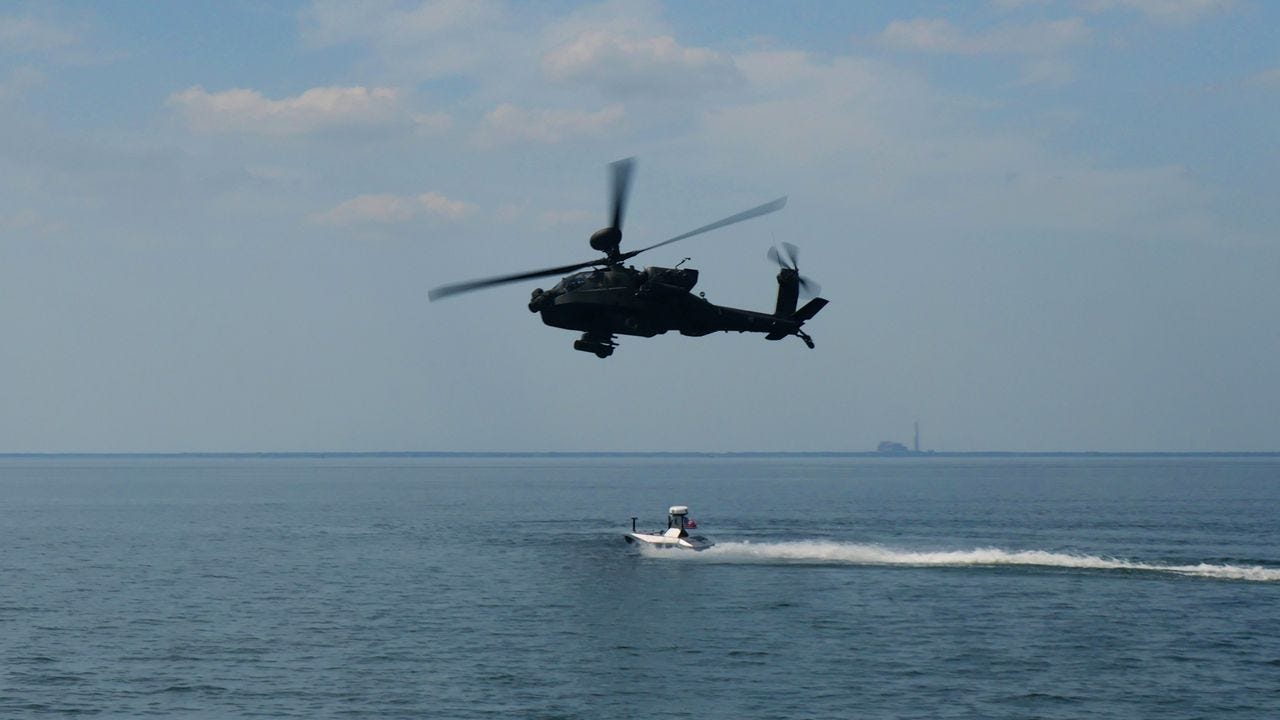
Take a good look at that little gray boat churning toward the ramp of the USS Essex.
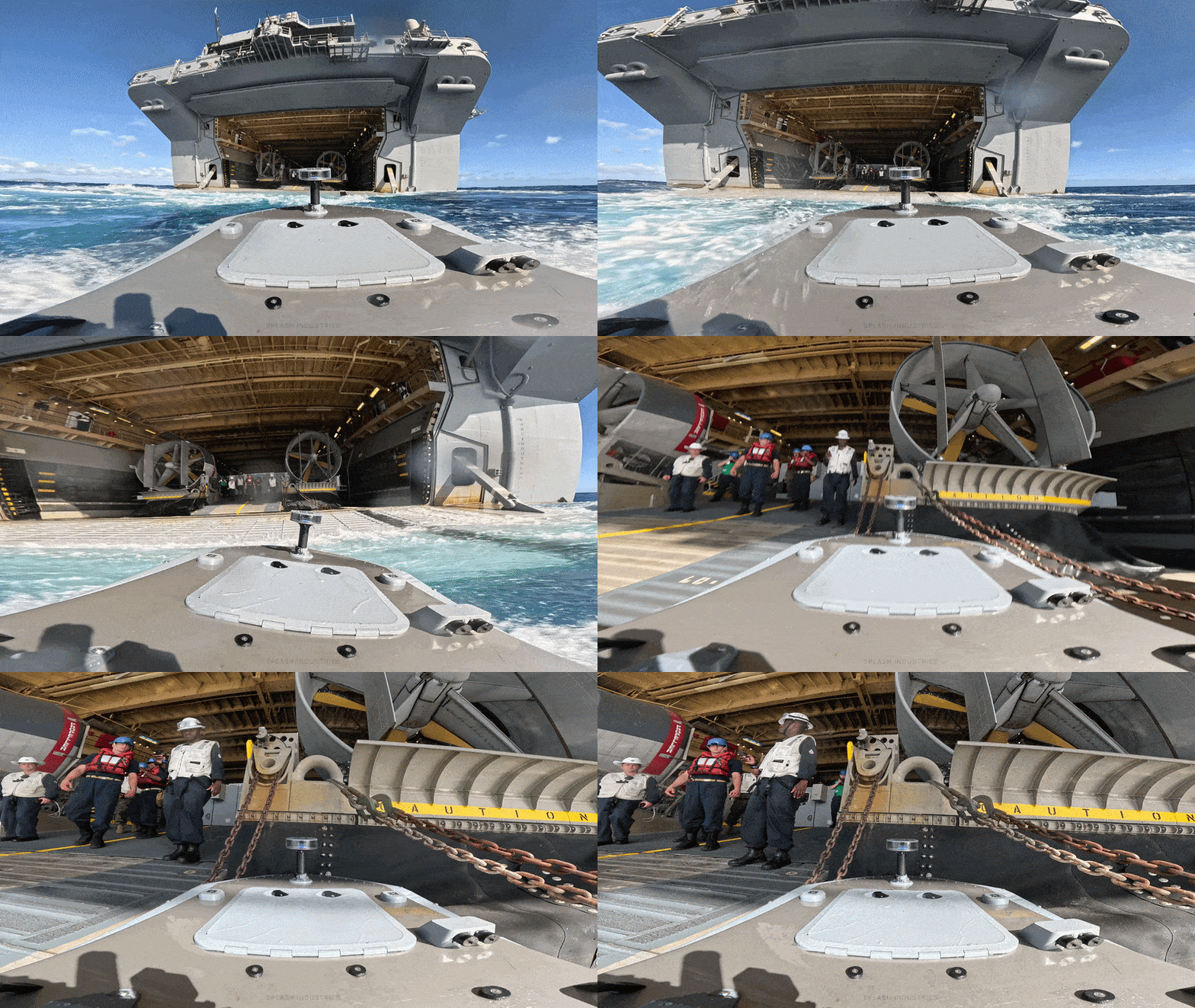
It’s 11 feet long, about the size of a jet ski and a half, and there’s no one on board.
This month at RIMPAC, the world’s largest international maritime exercise, it was selected to resupply the USS Essex and the aircraft carrier USS Theodore Roosevelt. RIMPAC is one of roughly a dozen Navy exercises Splash will join this year, opportunities that are almost never extended to startups.
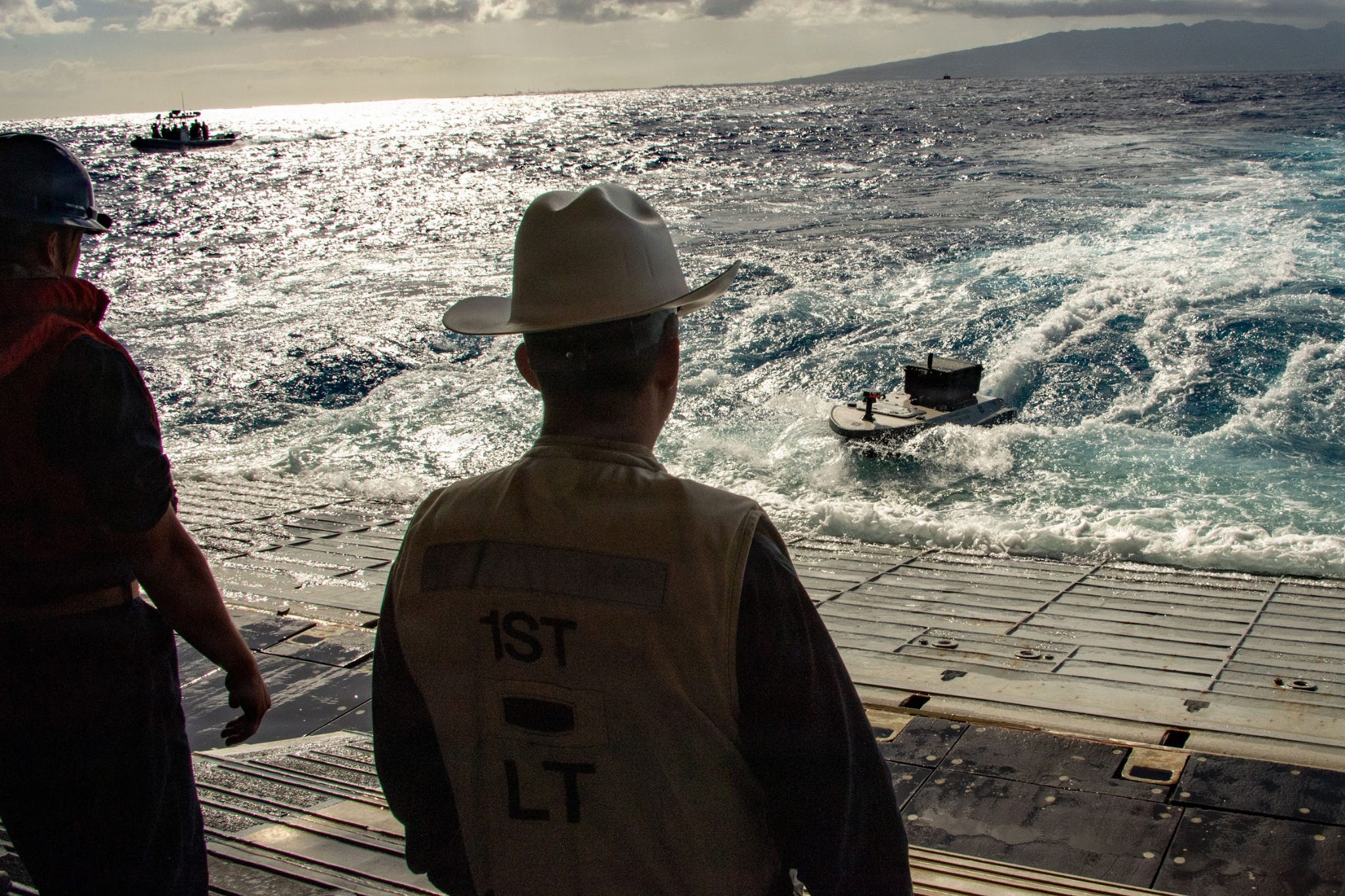
The boat belongs to Splash Industries, a Los Angeles-based startup building low-cost dual-use autonomous drone boats for civilian and national security missions. Today, Splash is coming out of stealth, and I’m thrilled to share that Ubiquity Ventures led their $4.2 million round.
What Splash does
Splash designs, manufactures, and deploys drone boats for national security missions: delivering cargo ship-to-shore without a dock or a crew standing by, and keeping watch over open water without someone staring at a radar screen. Its 11-foot Typhoon sells for about a tenth the price of comparable vessels and assembles in eight hours. Everything on board, the software, electronics, and sensors, is designed in-house while competitors buy off the shelf.
As Splash co-founder and CEO Ivan Avanesov shared with me: “The Navy has plenty of exquisite systems that cost millions. What they’re missing is something affordable enough to buy in volume and simple enough to deploy anywhere. That’s the boat Splash builds.”
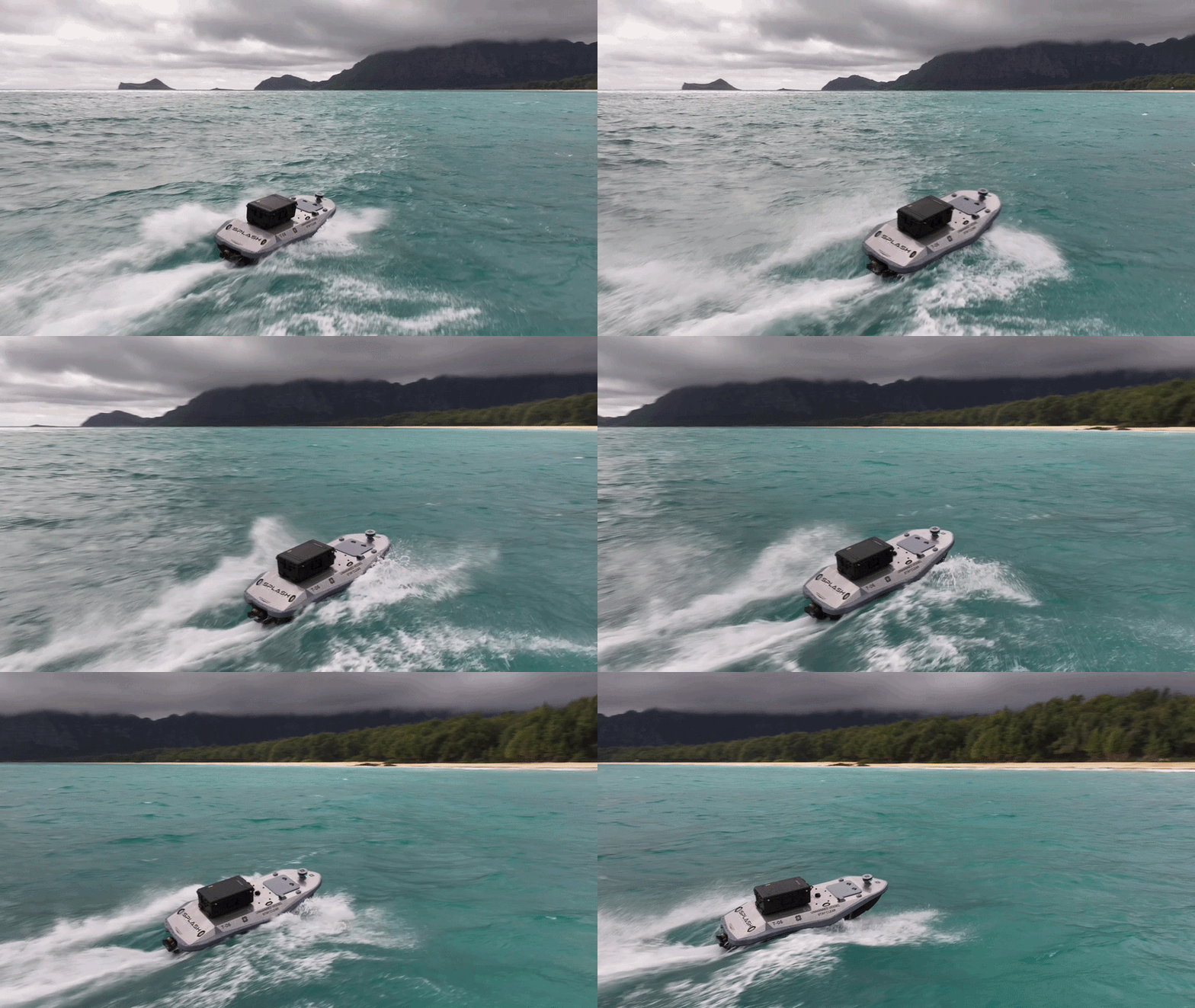
Each hull packs a Starlink, a GPU, and cameras. It can loiter offshore for a week or more, monitor and identify vessels, and transmit situational awareness back in real time. Its low draft even lets it land directly on a beach, something no comparable system can do, which is how Splash has won competition demos against companies valued in the billions. The company also just unveiled the Tempest, a larger vessel built for heavier cargo and longer missions.
These boats have already proven themselves in the field, logging more than 10,000 nautical miles of autonomous deployments across three continents this year, with a stack of Navy exercise wins and international selections behind them that most startups could only dream of.
The founders
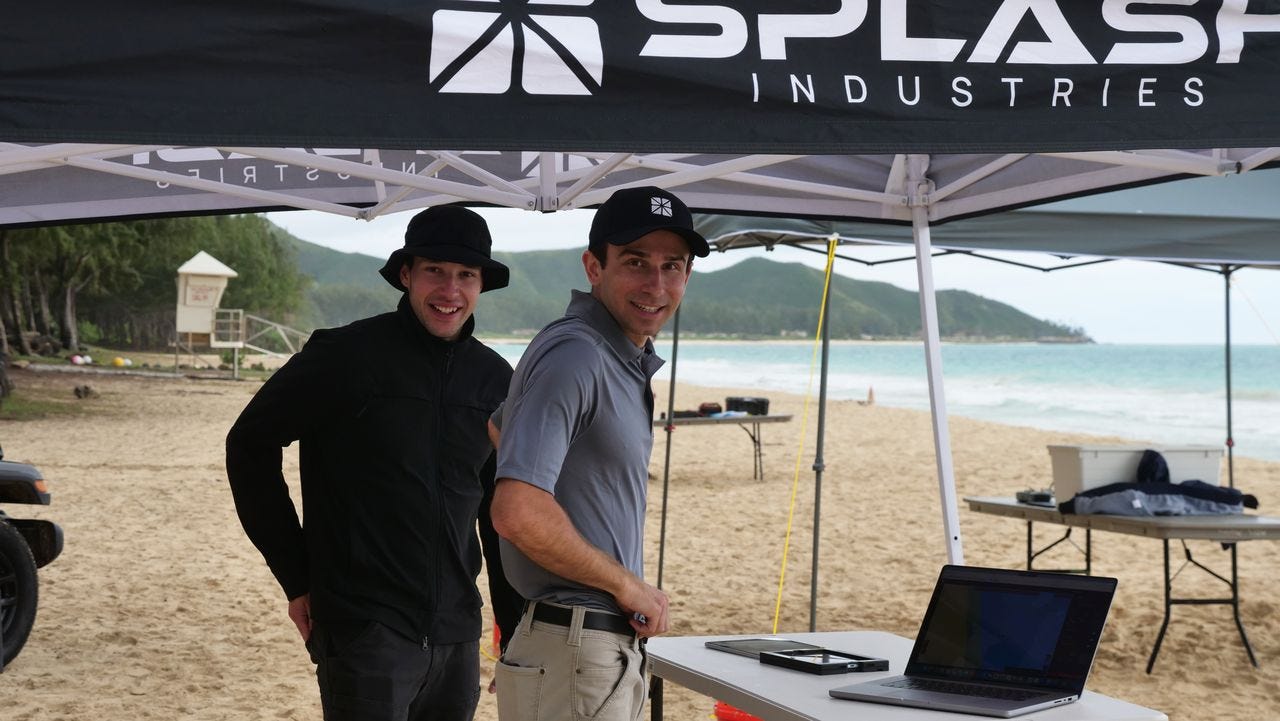
Splash was co-founded by Ivan Avanesov and Marcell Veszpremi, who have been hacking on projects together since they were 13 years old. Ivan built the world’s first affordable deep sea camera robotic camera at 17 and spent six years in marine robotics and manufacturing, selling to the US Navy, US Army, and Los Alamos. Marcell is a published roboticist and an expert in embedded software and machine vision whose team won RoboCup in 2024. Before Splash, the two ran a company together for six years, selling more than $3 million of products they designed and manufacturing over 10,000 units.
They are arguably the quickest builders I have met in my 15 years of venture capital. During diligence, I mentioned an idea to them one day. The next day they had it built, hardware and software, and deployed on their vessel. I was shocked. That hunger and intensity is exactly the kind of founder I want to bet on, and it runs through their team of ten engineers drawn from companies like Anduril, Google, and Saronic.
Why Splash is a Ubiquity company
The ocean is one of the world’s biggest blind spots. It covers 70% of the planet, yet monitoring it still depends on solutions designed 20 to 30 years ago: heavyweight, multimillion (or multibillion) dollar vessels from legacy defense contractors. Even newer startups in the space are building bigger, more expensive ships. That leaves offshore infrastructure unmonitored, waterfront cities like LA and New York struggling to patrol their borders, and coastlines where drug runners slip past an overstretched Coast Guard.
The interesting opportunities keep showing up in places that punish fragile technology. We backed Halter to put smart collars on cattle roaming remote New Zealand pastures, and Loft Orbital and Eclipse Space to build and operate satellites in orbit, where nobody can drive out and fix them. The open ocean belongs on that list. Splash builds software beyond the screen for one of the most demanding environments on Earth, where the autonomy has to hold up in real swells, hundreds of miles from shore, with the Navy watching.
Ubiquity is proud to have led this $4.2 million round. Read more in the official announcement here.
Nerdy and Early is where Sunil Nagaraj shares candid and sometimes contrarian thoughts on investing, space, life, and other rabbit holes worth exploring.
For Ubiquity Ventures investment announcements and portfolio news, follow along with the Ubiquity Ventures Newsletter.